

Devices
Snap Ships True AR Glasses to Consumers, Staking a Claim Before Meta and Apple Arrive
At $2,195, the company's first mass-market Specs put a standalone see-through AR display on faces ahead of every major competitor.
Mainstay Communications Team · · 5 min read
In brief
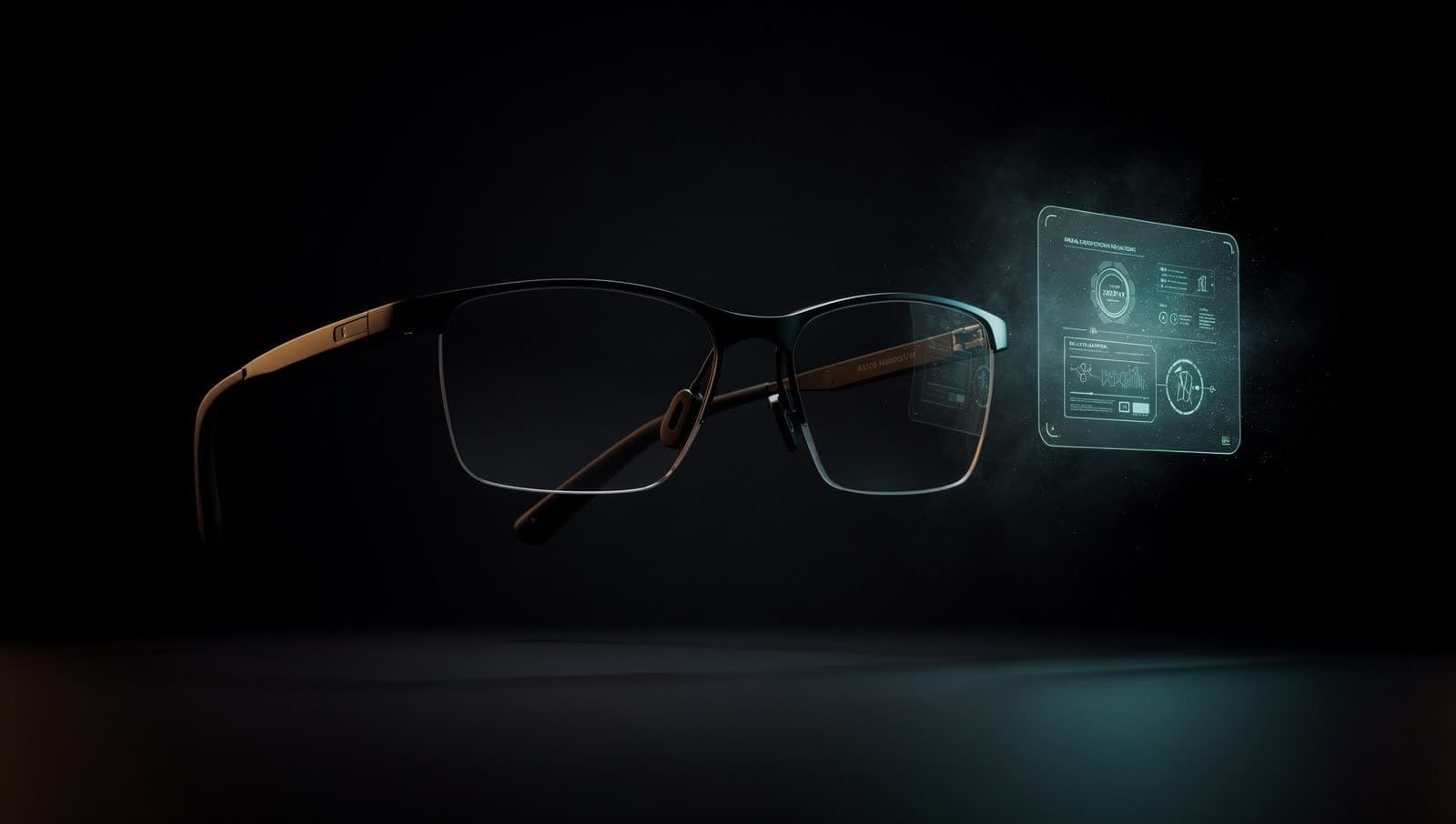
Snap unveiled its consumer AR glasses, called Specs, at Augmented World Expo on June 16, 2026, pricing them at $2,195 with a $200 refundable deposit and targeting a fall 2026 ship date in the US, UK, and France. The device runs standalone on two Qualcomm Snapdragon processors, projects a 51-degree field of view in 16 million colors, and requires no phone, puck, or tether. If Snap ships on schedule, it will be the first major tech company to put true standalone AR glasses in consumers' hands.
What Snap Built
Snap opened preorders for Specs at AWE 2026 on June 16, 2026. The glasses weigh 132 grams in the 47mm frame and 136 grams in the 52mm frame, built from Swiss TR90 polymer. Prescription users get removable inserts.
The display system uses Snap's proprietary liquid crystal on silicon (LCoS) technology with a nanostructure waveguide. The 51-degree field of view delivers what Snap describes as the equivalent of a 24-inch desktop monitor for productivity work or a 115-inch home cinema screen placed roughly 10 feet away for media. The lenses are electrochromic, shifting from clear to tinted in about 10 seconds.
Two Qualcomm Snapdragon processors power the device: one handles computer vision and the other runs Lenses, Snap's name for its sandboxed AR applications. Motion-to-photon latency is 7 milliseconds. Battery life is 4 hours of mixed use, with the included charging case adding four full recharges for 20 hours of total runtime.
The Post-Smartphone Argument
CEO Evan Spiegel has built a clear public thesis around the launch. "Almost 20 years since the launch of the iPhone, people are ready to think about computing differently," he told CNBC on the day of the announcement. He's described the smartphone as an isolating legacy device and positioned Specs as a step toward making computing human again.
Snap has invested over $3 billion in AR development across roughly a decade to get here. The company filed more than 7,000 patents through that process. Spiegel called 2026 a "crucible moment" for consumer AR, per reporting by Fast Company, and said Snap can't fulfill its core mission without the glasses.
The framing is intentional. Specs aren't positioned as a productivity appliance or a gaming peripheral. Snap is betting on an everyday wearable that keeps computing present without demanding screen-staring.
The Platform Under the Glass
Specs run Snap OS, an Android-based operating system that doesn't allow arbitrary APK installation. Applications come through Snap's Lens format, which developers build using Lens Studio (Windows and macOS, JavaScript/TypeScript). Snap shipped 10 Snap OS updates with 40-plus new features and APIs in the 18 months preceding the consumer launch.
The developer toolkit expanded substantially for the consumer release. Snap added a Native Development Kit supporting C/C++, full MCP support for AI agents, and agentic development integrations with Claude Code, Codex, and Cursor. The company also released a SPECS Spatial Benchmark and a Migration Agent to help developers port existing Lenses.
At launch, Specs support web browsing, navigation, laptop screen extension, object and space measurement, whiteboarding, real-time translation, and a contextual AI assistant. Third-party content includes Synth Riders, Star Wars minigames, and Niantic's Peridot. The developer pipeline that produced those apps traces back to the fifth-gen Spectacles, a developer-only device launched in September 2024 at $99 per month on an annual subscription, which gave Snap's builder community a two-year head start on the hardware.
Where Meta and Apple Stand
Specs enters a market where neither of Snap's most capable rivals is ready to ship a comparable product.
Meta has a broad smart glasses business through its Ray-Ban and Oakley lines, which sold over 7 million units in 2025. Its $799 Ray-Ban Display glasses, launched September 2025, add a heads-up display to that lineup. But Meta's current display glasses operate primarily as 2D notification overlays, a different category from Specs' spatial AR. Meta's full spatial AR project, codenamed Orion, is now expected for consumers no earlier than 2027, according to multiple reports. Orion features silicon-carbide waveguides and a 70-degree diagonal field of view, but at a manufacturing cost still in the high thousands per unit.
Apple is following a different path. Bloomberg's Mark Gurman reported on May 31, 2026, that Apple's first smart glasses slipped from a planned end-of-2026 announcement to a late-2027 launch. Apple's glasses are designed as an iPhone accessory with cameras, microphones, and speakers, with visual AI as the main differentiator. No display is planned for the first generation; a future version may add AR overlays. Analyst Ming-Chi Kuo expects mass production in Q2 2027.
That leaves Snap in an unusual position: the company with the smallest hardware business is shipping a device that's technically closer to what Meta and Apple both say they're building than anything either company has sold consumers.
What's Unverified
Snap has not published the display's resolution or brightness. Specific Snapdragon chip model names were not disclosed at announcement. The company hasn't announced pricing or availability for prescription inserts, and launch markets are limited to the US, UK, and France with no expansion timeline confirmed. A dedicated Specs event is scheduled for September 16, 2026, in Los Angeles, where Spiegel is expected to share a fuller look at software capabilities.
Sources
- Snap Opens Preorders For Specs, True AR Glasses Shipping This Fall For $2195, UploadVR
- Snap Reveals Next-gen Specs AR Glasses, Priced at $2,200, Road to VR
- Introducing SPECS Augmented Reality Glasses, Snap Newsroom
- Snap unveils $2,195 AR glasses as CEO Evan Spiegel bets on post-smartphone future, CNBC
- Evan Spiegel says Snap can't fulfill its mission without its new AR glasses, Fast Company
- Snap picks Qualcomm to power its 2026 Specs AR glasses, Notebookcheck
- Snap's New AR Glasses Are Trying to Beat Meta to the Punch, Gizmodo
- Apple AI glasses launch pushed back to late 2027, 9to5Mac
- SPS 2024: Introducing New Spectacles and Snap OS, Snap Newsroom
- Meta Sold Over 7 Million Smart Glasses in 2025, Road to VR
- No, Not Orion: Meta's First Real AR Glasses Tipped for 2027, Tom's Guide
Companies mentioned
Mainstay Digital · Spatial and 3D visualization for industrial companies