

Platforms
Android XR's Opening Move: Samsung's Galaxy XR and the Platform War for Spatial Computing
Google, Samsung, and Qualcomm launched Android XR in October 2025 with a $1,799 headset. The device is a bet on the premise that a price gap, an open platform, and Gemini AI can crack open a market Apple pioneered.
Mainstay Communications Team · · 6 min read
In brief
Samsung's Galaxy XR, which launched at $1,799 in October 2025, is the opening device for Android XR, Google's mixed-reality operating system built around Gemini AI and an open-OEM model. Priced $1,900 below Apple's Vision Pro, it targets early adopters who want spatial computing at a lower entry point. Android XR-powered smart glasses from Warby Parker and Gentle Monster are slated for fall 2026, and XREAL has publicly committed to the platform, signaling that Google's spatial strategy extends well beyond a single headset.
A Platform, Not Just a Headset
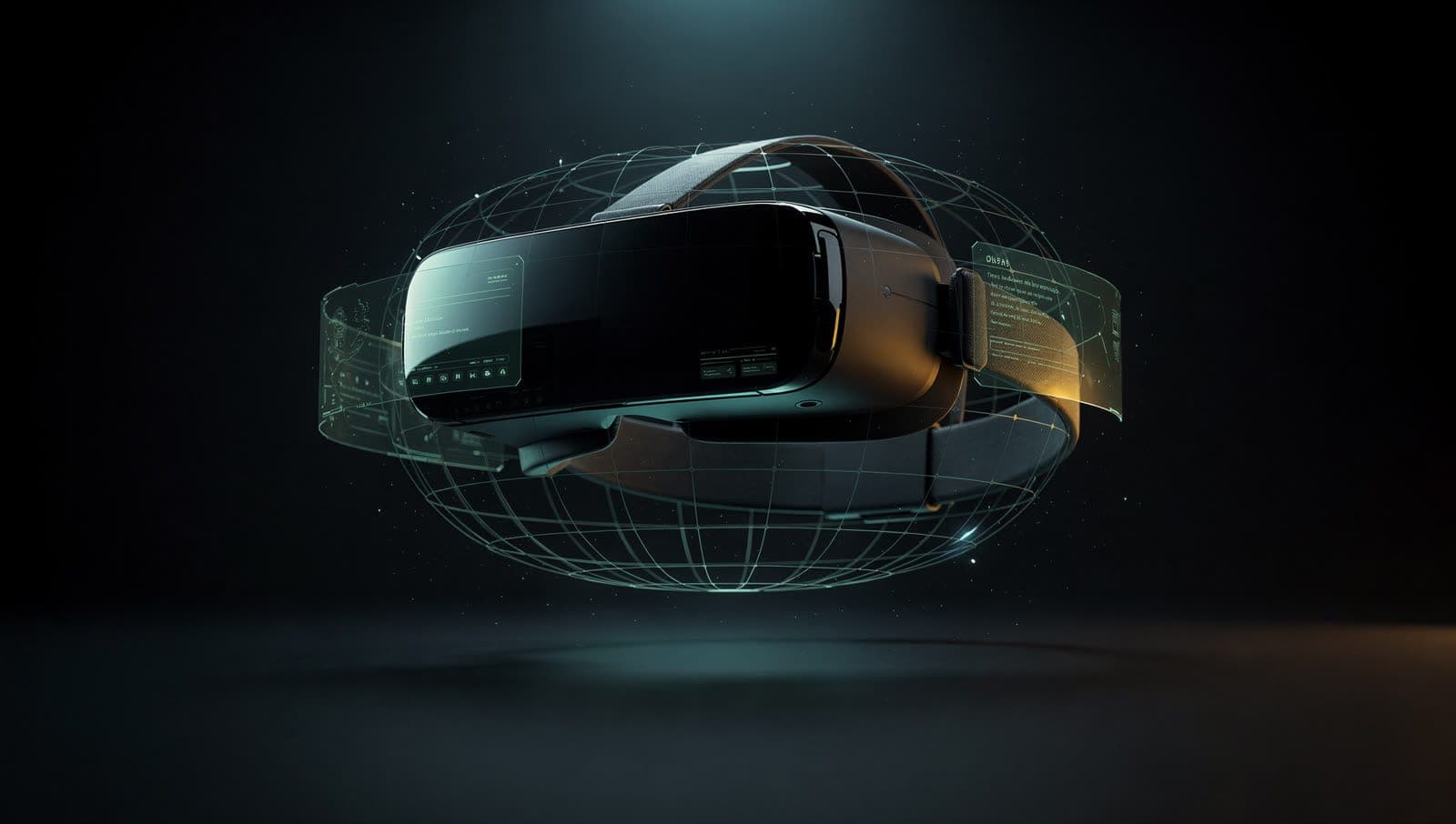
The Samsung Galaxy XR, which went on sale October 21, 2025, in the United States and South Korea, carries a $1,799 price tag and Qualcomm's Snapdragon XR2+ Gen 2 chip. On paper, it's a headset. In practice, it's the launch vehicle for Android XR, Google's new operating system purpose-built for mixed reality.
That distinction matters more than the hardware. Apple built visionOS on a closed platform and priced the Vision Pro at $3,499 at launch; Apple has since raised that price to $3,699. Google's counter-strategy is openness, tying Android XR to Qualcomm silicon and inviting any OEM to build on it. The Galaxy XR is the first device on the platform, and Samsung is the launch partner. But it won't be the only one for long.
What the Hardware Delivers
The Galaxy XR ships with dual 3,552 x 3,840 Micro-OLED displays running at 72Hz default with a 90Hz ceiling, 16GB of RAM, 256GB of storage, and a 109-degree horizontal field of view. Battery life is two hours of general use, or two and a half hours of video playback, with power delivered via an external tethered pack, matching Apple's approach on Vision Pro.
Google confirmed the device is available through Samsung.com, Samsung Experience Stores, and select Google Stores in New York and California.
Gemini at the Center
Android XR's defining architectural choice is Gemini. Google built the AI model into the OS-level experience so it can see and hear what the user sees and hears, then act on their behalf across apps.
On Galaxy XR, Gemini Live operates with what Google describes as awareness of the user's surroundings, so it can surface contextual information without a manual prompt. The company says the assistant can take multi-step actions across apps. That's a different posture than Siri on visionOS, which has stayed largely reactive.
The platform is built on open standards including OpenXR, WebXR, and Unity, which means existing XR content can port without proprietary toolchains.
The Explorer Pack
To soften the $1,799 entry point, Google and Samsung assembled what they're calling the Explorer Pack. Confirmed contents include 12 months of Google AI Pro, YouTube Premium, and Google Play Pass, plus NBA League Pass for U.S. buyers. The bundle also included a discounted YouTube TV trial and a set of XR-native apps from Adobe, Calm, and others. Samsung confirmed the offer ran through June 30, 2026.
The pack is a direct acknowledgment that the Galaxy XR's software catalog is still building out. Apple's visionOS had accumulated roughly 2,500 native apps by early 2026, per Apple's own figures. Android XR's Play store offers millions of mobile and tablet apps alongside a growing set of native XR titles from partners including Owlchemy Labs and Resolution Games.
The Price Gap as Strategy
The $1,900 spread between the Galaxy XR's launch price and the Vision Pro's current $3,699 is a deliberate wedge. Samsung's device targets buyers who find Apple's price prohibitive but want something above Meta's Quest 3S tier (the Quest 3S launched at $299).
The Galaxy XR sold approximately 40,000 units in 2025, according to market estimates cited by multiple XR analysts. That's a modest start for a new platform. Apple reportedly shipped roughly 600,000 Vision Pro units before scaling back development, per reporting aggregated by virtual.reality.news. Both numbers reflect a market that's still pulling a small, technically-curious early-adopter population rather than mainstream consumers.
The Glasses Extension
The Galaxy XR headset was always meant to be the opening chapter. At Google I/O 2026, Google confirmed that Android XR-powered smart glasses will ship in fall 2026, developed with Samsung and two eyewear partners: Gentle Monster, focused on fashion-forward designs, and Warby Parker, handling a more traditional aesthetic.
Google confirmed two separate product tiers. Audio glasses, which use over-ear speakers to deliver Gemini assistance as a voice companion, will launch first in fall 2026. Display glasses, which project information into the user's line of sight, are on a separate timeline with no confirmed release date.
Both glasses work as companions to Android or iOS smartphones. That cross-platform compatibility is notable: Apple's spatial products are walled off from Android users entirely.
XREAL has also confirmed Android XR hardware plans, making it the first non-Samsung OEM to publicly commit to the platform.
The Competitive Frame
The spatial computing market ran to roughly $229 billion in estimated value in 2026, though the headset subset of that market remains a rounding error by consumer electronics standards. Meta holds the dominant position in XR hardware by unit share, with its Quest ecosystem accounting for more than half the market. The Ray-Ban Meta smart glasses reported $2.15 billion in revenue in 2025, which exceeded Meta's Quest hardware revenue for the first time.
That comparison points to where the real volume opportunity sits: glasses, not headsets. Google's roadmap moves in that direction. Samsung's does too.
Apple hasn't announced a Vision Pro successor, and the price increase to $3,699 reads by several analysts as a signal the company has repositioned the device as an enterprise product while it prepares what comes next. Apple hasn't commented on those interpretations.
What Comes Next
Android XR's fall 2026 calendar is active. Samsung's audio glasses are scheduled to ship. XREAL's Android XR hardware plans are pending detail. Google has flagged additional announcements tied to Samsung's Fold 8 launch event window.
The platform is still early. The app library is still thin relative to visionOS. And at $1,799, the Galaxy XR isn't priced for casual experimentation.
What Google has built is an architecture: open platform, Gemini-native, spread across headsets and glasses, with multiple OEMs to follow. Whether that architecture attracts enough developers and users to become a genuine operating system duopoly in spatial computing is a question the next two years will settle.
Sources
- Samsung Galaxy XR price, specs, and release date, Road to VR
- Introducing Galaxy XR, the first Android XR headset, Google Blog
- Android XR smart glasses launching this fall, Google I/O 2026 Blog
- Samsung and Google unveil Android XR glasses with Warby Parker and Gentle Monster, Android Authority
- Galaxy XR Explorer Pack terms and confirmed bundle contents, Google Support
- Apple Vision Pro price raised to $3,699, VR.org
- Apple Vision Pro vs Samsung Galaxy XR: 2026 comparison, Reality Atlas
- Samsung Galaxy XR arrives at $1,799 to challenge Vision Pro, Virtual Reality News
- Google and Samsung's Android XR glasses launch in Fall 2026, 9to5Google
- Samsung's October 21 launch date confirmed, 9to5Google
Companies mentioned
Mainstay Digital · Spatial and 3D visualization for industrial companies