

Markets
Bedrock Robotics Raises $600 Million as Fully Autonomous Excavators Move to Active Commercial Job Sites
A startup built by former Waymo engineers has closed a $600 million Series C, reached a $4.1 billion valuation, and logged its first zero-cab-intervention commercial excavations at active job sites in Nevada and Texas.
Mainstay Communications Team · · 4 min read
In brief
Bedrock Robotics raised $600 million in a Series C round co-led by CapitalG and Emergence Capital, reaching a $4.1 billion post-money valuation as its retrofit autonomous excavation systems completed their first paid commercial work without onboard operators in August 2026. The San Francisco company's kit-based approach lets contractors turn existing excavator fleets autonomous in a single day. The financing brings total funding to nearly $1 billion since Bedrock's 2024 founding, arriving as the construction industry faces the retirement of more than 40 percent of its workforce within five years and an operator training cycle that stretches past five years.
The Round
Bedrock Robotics closed $600 million in Series C financing co-led by CapitalG, Alphabet's independent growth fund, and Emergence Capital. New investors include US Innovative Technology Fund, Bessemer Venture Partners, and Temasek. Existing backers Nvidia, 8VC, Georgian, Valor Equity Partners, Xora, Eclipse, and Perry Creek Capital all participated.
The post-money valuation stands at $4.1 billion. Total funding since the company's 2024 founding now reaches nearly $1 billion.
CapitalG's Derek Zanutto, who co-led Bedrock's prior Series B, summarized the pace in a firm post: "Earlier this year we co-led the Series B on a bet that this team would get autonomy to paying customers in years, not decades. They achieved it in one."
From Test Sites to Paying Customers
Bedrock's excavators first completed paid work without any onboard operator in August 2026, at 3 active commercial sites. A Nevada water treatment facility built in partnership with Sundt Construction was one of the three. Two Texas projects followed: a multi-million cubic yard earthwork site with Champion Site Prep and a 1.2 million cubic yard civil sitework project with Zachry Construction Corporation.
CEO Boris Sofman confirmed the commercial milestone in a statement: "We have proven that fully autonomous excavators can perform real work of value alongside the crews and workflows already in place on job sites."
Cade Rowley, CEO of Sundt Construction, described the operational benefit from the field: "Our partnership with Bedrock Robotics is helping us tackle some of the challenges that matter most in construction: making schedules and costs more predictable, getting more consistent use out of our equipment, and allowing our skilled crews to focus on the work where their experience matters most."
Bedrock's customer base has more than doubled since 2025. New deployment partners include Haydon in Arizona, Wagner Construction in Minnesota, and several additional regional contractors across the Midwest and South Atlantic.
The Labor Gap
Heavy construction faces a compounding workforce problem. The Associated Builders and Contractors reports that more than 40 percent of the construction workforce will reach retirement age within five years. The Bureau of Labor Statistics projects 42,500 annual job openings for construction equipment operators through 2035, against a current base of 534,100 positions.
Training an excavator operator to full proficiency takes 5 or more years. That's a cycle that hiring incentives and wage increases can't meaningfully shorten, and the retirements are already in progress.
How the System Works
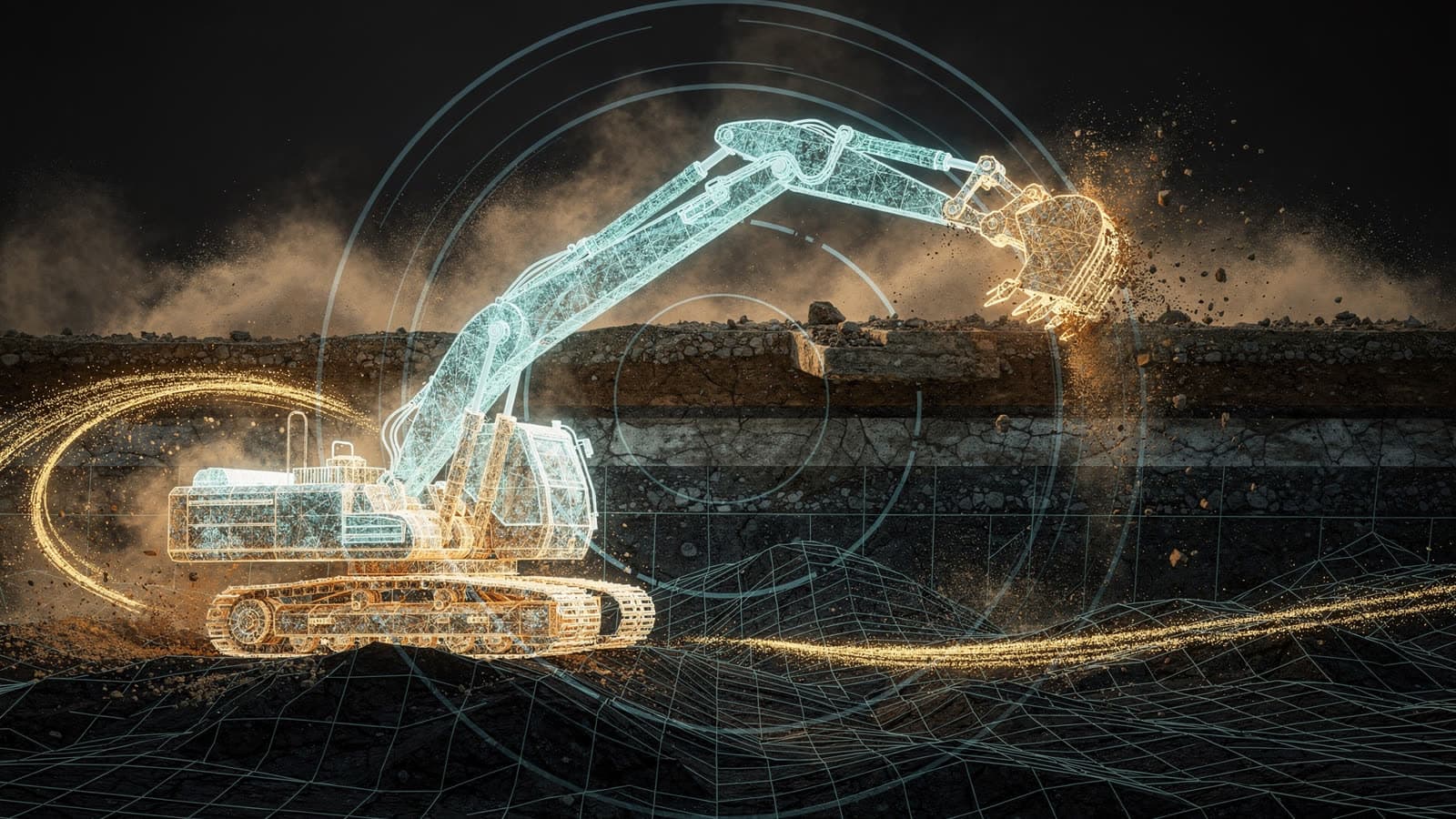
Bedrock's product is the Bedrock Operator: a retrofit kit of sensors and computing hardware that installs on an existing excavator in a single day with no permanent modifications to the machine. The AI stack trained on tens of thousands of hours of field work handles perception, motion planning, and task execution after a site manager sets initial parameters.
CTO Kevin Peterson has been direct about the design constraint: "We can't compromise safety. [Machines] operate around people; water trucks drive up, and the machine has to react." The system halts automatically when workers or unauthorized equipment enter a defined perimeter, allowing the excavator to run alongside active crews.
Current capabilities cover earthwork tasks like cut-and-fill, trenching, and foundation preparation. Bedrock has said multi-machine orchestration is next, with connected fleets that coordinate across machine types to plan, share, and execute jobs together.
What the Capital Is For
In their Series C commentary, CapitalG's Zanutto and his co-investor Conner Lovely described the company's scope past excavators: "Bedrock is building the orchestration layer for physical work...This applies anywhere heavy equipment runs: data centers, power grids, roads, water, mining, and housing."
Boris Sofman placed the company inside a larger shift: "The physical economy is the next great frontier for machine learning." The $600 million gives Bedrock the runway to expand across machine types, grow its installation base, and build out the fleet orchestration layer its customers are already requesting.
Sources
- Bedrock Robotics Raises $600 Million to Scale Autonomous Excavators Across the US, Robotics and Automation News
- This Startup's Self-Driving Excavators Help Dig Up $600M in New Funding, TechCrunch
- Fully Automated Excavators Deployed on Construction Jobsites, Building Design + Construction
- Bedrock Robotics First Operator-Free Excavator Deployments Take Off, The Robot Report
- Doubling Down on Bedrock, CapitalG Insights
- Bedrock Robotics Raises $600 Million to Scale Autonomous Excavators Across US Construction Sites, mlq.ai
Companies mentioned
Mainstay Digital · Spatial and 3D visualization for industrial companies