

Inside the Machine
The Freight Math That Quietly Killed the Trade-Show Demo
When shipping a machine to a show costs more than the show is worth, companies find another way to put it in the room.
Kelly Massad, Co-founder, Mainstay Digital · 7 min read
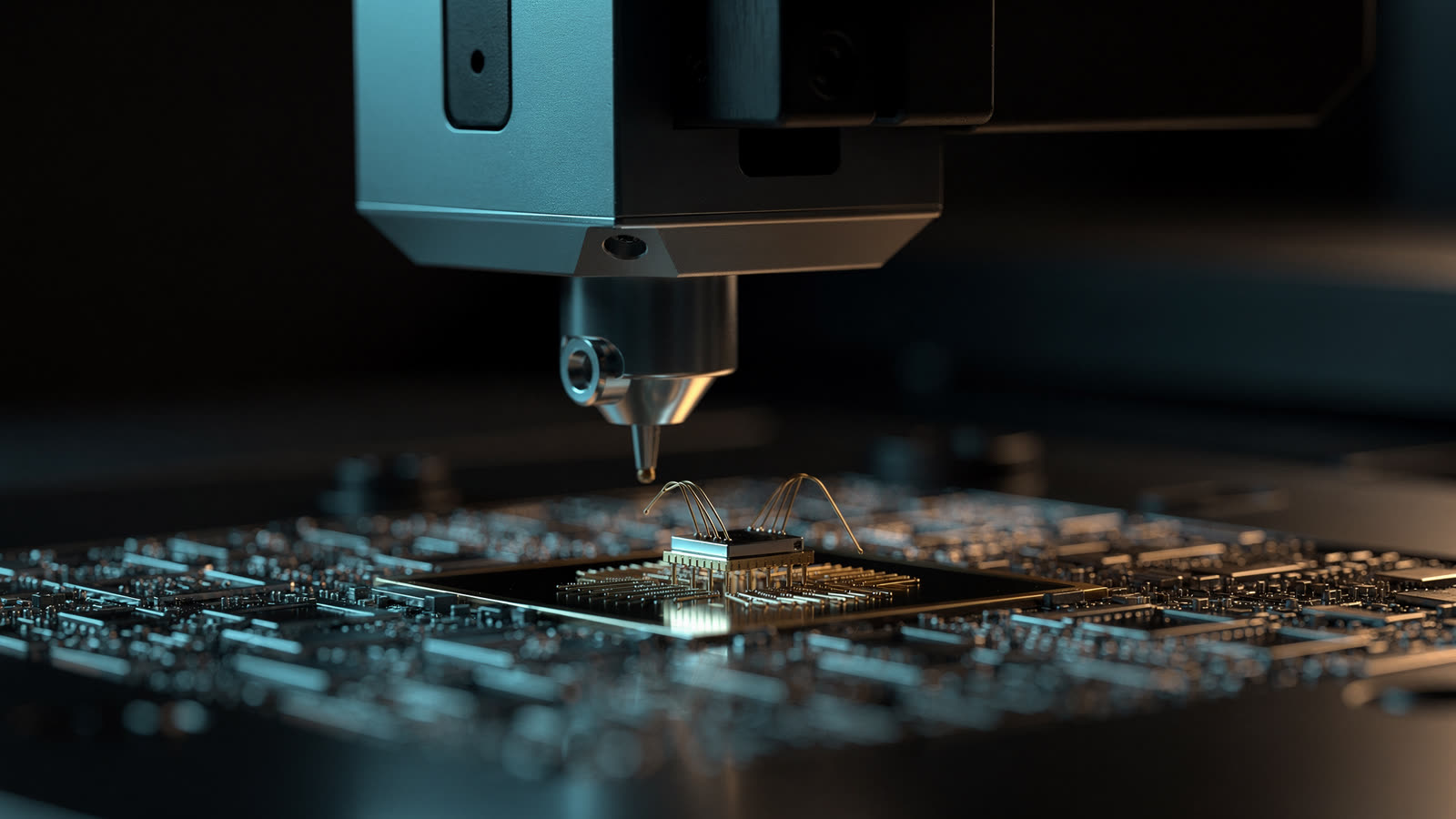
At some point, the economics of shipping heavy capital equipment to trade shows stopped working. Not dramatically. No one sent a memo. The freight invoices kept climbing, the logistics got harder, and somebody in marketing did the math and realized they were spending a significant chunk of the show budget before the doors even opened. Crating, freight, labor, insurance, the team to set it up and break it down. For a machine that weighs hundreds of pounds and places components with micron-level precision, the number isn't small.
The predictable response is to ship a smaller demo unit, show a video on a loop, or hand buyers a brochure. Those are also the reason so many buyers leave technical shows with only a vague sense of what they saw. None of those things actually puts the machine in the room.
The interesting response is to build a different kind of presence entirely.
What the buyer actually needs to see
The issue at a technical trade show for capital equipment isn't brand awareness. Engineers and procurement managers at a semiconductor or photonics conference aren't evaluating logos.
They want to understand how a machine moves. How the gantry sequences. What pick-and-place looks like at operating speed. How the optical alignment fits into the cycle. This is kinetic information. You can't convey it with a photograph, and you can barely convey it with a product video because the buyer has no sense of scale.
What you need is the machine, moving, at real-world scale, in the room where the conversation is happening.
That's the problem worth solving. The freight bill is just what makes you start solving it.
A die bonder in augmented reality
MRSI Systems, the die bonding division of the Mycronic Group, makes precision placement equipment for the photonics and advanced packaging market. These aren't commodity machines.
The MRSI-705, their most configurable system, handles eutectic and epoxy processes, accommodates multiple tooling configurations, and runs a pick-and-place sequence that involves pulling a die from a waffle pack, passing it through an optical camera for alignment, and placing it onto a substrate that has already received a dispense of conductive epoxy. Francesca Navarro, MRSI's product manager for die bonding, described it as "our Swiss army knife kind of machine. You could do so much with it."
Jennifer Russo, MRSI's marketing manager, said the obvious thing plainly: "Our machines are very large, so it's absolutely expensive to ship them to shows." At some point, the math stopped working.
They came to us with their SolidWorks STEP file. We applied MRSI's colors, materials, and brand spec, and animated the key motion sequences. What came out the other end is an AR model that runs on an iPad or iPhone, launches from a QR code, and places the MRSI-705 in the room at real-world scale.
A buyer can walk around it, lean in on the pick-and-place head, and watch the full cycle play out. No freight. No crating. No logistics coordinator.
Steve Palaia from our team put it in competitive terms: "These big machines and actually seeing them working, it's going to be something that a lot of your competitors don't have. Often they do have it where it's just static, but no one has it where it's animating."
That's the actual differentiator. Static 3D models have existed for years. Animation that shows the machine doing its job, at scale, in the buyer's space, is still rare enough to stop people at a booth.
The offline constraint everyone forgets
There's a practical detail that shapes every decision in trade show sales, and most people only learn it by getting burned: convention halls don't have reliable Wi-Fi.
International Microwave Symposium, Photonics West, the semiconductor and photonics shows where MRSI sells, these aren't reliably connected. If your demo depends on the network, you're one bad router away from showing a loading spinner to the buyer you flew in to meet.
The AR file for the MRSI-705 is saved directly to the iPad before the show. It lives locally. A salesperson opens it from the Files app, and the AR launches without touching the network.
No QR scan required if the device already has the file. No scrambling for a hotspot at the booth.
The file format is USDZ, native to iOS. Search the Files app for "usdz" and any saved models surface immediately. Jen Russo worked with our team to map out how sales reps across North America and China could get the file onto their devices before events.
That logistics problem, device to device, without a live connection, isn't complicated. But it has to be thought through in advance, and most people don't think through it until the Wi-Fi fails.
Self-serve, without losing control
The AR demo is one layer. The layer underneath it matters more for how MRSI's sales team actually operates.
We showed the MRSI team how to build hotspot experiences from the same underlying 3D asset. A hotspot experience puts clickable callouts on the model, each zooming to a specific component and showing whatever text and images the team has configured.
For the 705, that means the team can build an experience around one tooling configuration, duplicate it in the platform, and edit the callouts to reflect a different configuration. The underlying model stays the same. The sales story changes.
Navarro's reaction when she first saw the builder: "It's like a way cooler way of doing PowerPoint, basically."
That quote undersells it, but it gets at something real. A sales leader at MRSI can configure a hotspot experience, set the messaging, and distribute it to the team without routing anything through us or through their internal marketing queue. A standard user in the platform can copy an experience and adjust callout text, but can't delete the original. The source stays clean.
Short codes give the analytics a useful structure. Instead of one QR code pointing to the same experience everywhere, MRSI can create a separate code for each trade show, each rep, each LinkedIn post. The codes point to the same underlying asset but track independently and roll up to a parent dashboard.
Russo flagged why this matters: if MRSI has half a dozen AR experiences across their product line, one undifferentiated QR code tells you almost nothing. Separate short codes tell you which event drove engagement, which rep is using the tool, and where in the world buyers are opening it when they scan from a LinkedIn post.
That's data most industrial equipment companies don't have today. Most of them have booth traffic counts and intuition. This is something more useful.
What MRSI is doing next
The MRSI-H is the next machine in the queue. Faster and more production-oriented than the 705, less configurable, smaller workspace. Built for throughput rather than flexibility. Navarro noted that the H's geometry gives the team more discrete components to call out in hotspot experiences. More components, more callouts, more of the machine's story told in the experience.
That means a different buyer conversation. The 705 sells on flexibility. The H sells on speed and output. Same platform, same AR workflow, different emphasis.
MRSI went to the International Microwave Symposium with the animated AR model on an iPad. At the next show, they plan to have it on a large touchscreen at the booth. The machine goes wherever they go.
Peter, MRSI's North America sales director with more than 25 years at the company, saw what the team had built. Navarro relayed his reaction: "He said that he liked it. I was like, oh, okay. That's really good." From someone who has seen every version of how this company sells, that reads as a meaningful signal.
The pattern we keep seeing
Strip away the specifics and MRSI's situation runs across the capital equipment market.
The product is complex and large. Buyers are technical and need to see the machine in motion. The machine can't cheaply travel to every conversation. And the people who understand it best, the applications engineers and product managers, can't be in every meeting that matters.
The answer that's starting to work is an animated, AR-enabled model a salesperson can carry on an iPhone, configure for the meeting they're walking into, and share with a buyer who's twelve time zones away. No freight. No logistics. No change request to marketing every time a callout needs updating.
The demo lives on the device. The buyer stands in their own room and watches the machine run. The freight math stops being a problem because freight stops being the mechanism.
Some products are too large to ship to where the buyer is. So you build the next best thing and put it in their hands.
Referenced: MRSI Systems · LinkedIn
Have a complex product that's difficult to explain?
Show us