

Complex Products, Clearly Sold
A $1 Million Machine Should Not Be Sold With Six JPEGs
High-value industrial equipment routinely gets marketed with a handful of flat photos. A golf-course pump station builder decided that wasn't good enough.
Kelly Massad, Co-founder, Mainstay Digital · 6 min read
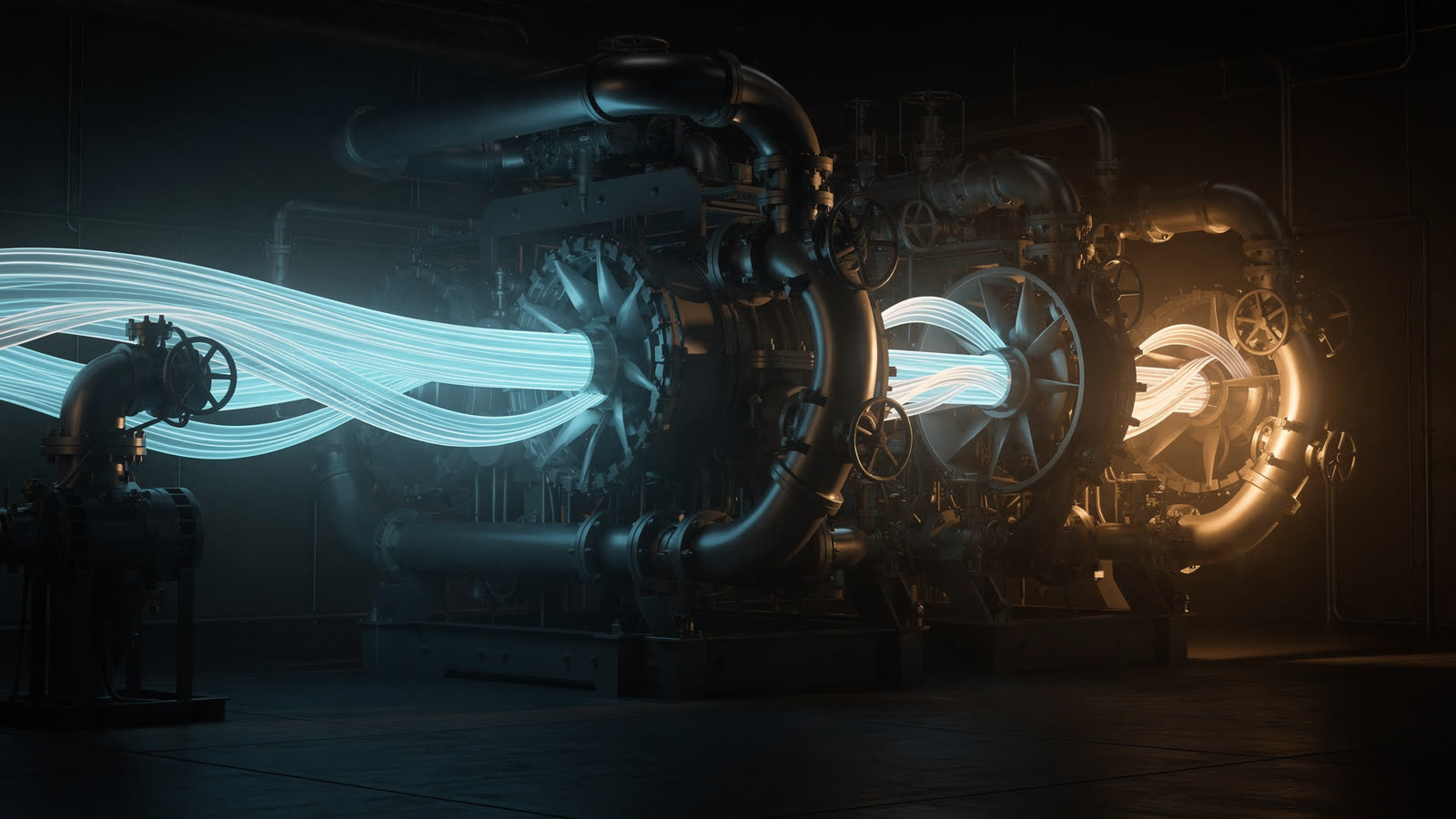
Picture what a buyer sees when they're evaluating a packaged pump station for a golf course installation. A PDF with a couple of exterior renders. Maybe a spec sheet.
If the manufacturer did their job, a photo of a completed system sitting in a shelter that looks, from the outside, like a utility shed. That's it. That's the whole picture for a machine whose entire value proposition lives inside a shelter the buyer will never open on a sales call.
This is the standard for technically complex capital equipment, and it's a strange one. The more sophisticated the engineering, the more invisible it tends to be at the point of sale. Industrial equipment is enclosed, installed, underground, or behind a panel.
The spec sheet describes it. The photo shows the outside. Neither one teaches a buyer what they're actually purchasing.
We keep working with manufacturers who've gotten comfortable with this gap. They know their product is better than the competition's. They expect the buyer to figure that out from a PDF.
Sometimes that works. More often it makes the sale harder than it needs to be, especially when the person across the table isn't an engineer who can read a schematic.
The product is invisible by design
MCI Flowtronex has been engineering packaged pump stations since 1974. Their specialty is vertical turbine systems for golf course irrigation, designed and built in Dallas. These are technically serious machines: a vertical turbine pump extends down into a column below the skid, the piping runs through an epoxy-coated shelter, the control panel is closed.
To anyone who hasn't seen the internals, the whole system is a box.
The challenge MCI's team put in front of us was exactly that. A superintendent spec'ing a new installation, or a course evaluating a system upgrade, is making a significant financial decision about something they can't see the inside of. The question was how to open it up.
The concept that came out of our early calls with MCI was simple: mirror how you'd actually encounter one of these systems in the field.
Start from the outside. The shelter sits on the course. The doors open. You go inside and walk through how the system works.
We built that as a 4-segment animation rather than a single long-form video. The 4 scenarios: startup sequence, system shutdown, VFD failure, and the stainless steel splash guard. Jaden Powell from MCI's team put it plainly: "as terms of marketing, it's going to be going up in shorter segments anyway."
Shorter segments are more usable. A sales rep can pull the one that's relevant to the conversation they're already in.
The animation uses cutaway views with arrows and overlays to show internal water flow, including what happens when air enters the system during startup. MCI's CAD models are simplified and don't expose internal turbine detail, so getting the flow logic right meant working from reference images and a walkthrough video from MCI's VP of sales. The result shows a buyer something that has never been shown to them before: what the machine actually does.
An AR model for something most buyers have never touched
Alongside the animation, we built an AR model of the 3-pump configuration, which represents a standard golf course installation. The intent is direct: a buyer or sales engineer scans a QR code and places a full-scale pump station on the floor in front of them. No app download. No headset. Just a phone and a real sense of scale.
In our first call, MCI's team had asked whether parts could expand out one by one, like a clickable exploded view. We came back to the next call with a different answer: hotspot experiences built on our platform, where buyers click points on the model and get information about each component.
We ran through the demo on a June call. Two versions: one where clicking a hotspot opens a full-screen side panel with text, images, and embedded video, and one styled to match the AR panel. Maddy Leone, MCI's marketing manager, watched the demo and asked: "I really like this. Is this going to cost us any more than what we already paid for?"
It wasn't. Mainstay included a year of platform access as part of the project, unlimited seats. Bring the sales team, bring marketing, no per-seat cap.
The part that changes how a sales team operates day to day
The hotspot experience does something the animation can't: it stays editable after delivery.
MCI can go into the platform and update callout text, swap images, or drop in video directly from YouTube or Vimeo. Adelaide Walker from our team flagged that early on: if the pump head animation video is hosted on YouTube, MCI can embed a clip of it into the popup that fires when a buyer clicks the pump head on the AR model. One asset feeds another, and MCI controls the connection.
MCI can also build tailored versions for specific accounts. A particular golf course with a particular installation need can get a version where the relevant components are highlighted and the messaging reflects what the salesperson already knows about that account. MCI's team put it directly: there are things they want to highlight over others for different people.
The platform makes that possible without routing every change back through us.
The analytics layer adds something further. The platform tracks which hotspots buyers actually engage with. After enough sessions, that data tells MCI which component or feature the market keeps clicking on.
It's the kind of signal that reshapes what leads a pitch.
What this is actually about
MCI's situation isn't unusual. A lot of manufacturers build products that are functionally invisible to a buyer at the point of sale: enclosed in a cabinet, installed off-site, assembled inside a shelter no one opens until commissioning. The spec sheet describes the product. The render shows the exterior.
Neither one closes the comprehension gap a real buyer has when they're evaluating something they can't physically inspect.
The question we hear from sales teams is usually some version of: how do we get the buyer to understand what makes this better? The answer is giving them a way to see inside.
A 4-segment animation that walks through a startup sequence and shows what happens during a VFD failure teaches a buyer something real. A hotspot that explains the splash guard and why it matters does the same. These are tools the sales team can use in a conversation, not just attach to an email and hope someone reads it.
The work with MCI is moving through production as of mid-2026: the animation, the AR model, the hotspot build. What MCI has committed to is the direction, and the logic behind it holds for most manufacturers in technical, high-consideration categories.
If the buyer can't picture what they're buying, the sale is harder than it needs to be. That gap is closable. You just have to decide to close it.
Referenced: MCI Flowtronex · LinkedIn
Have a complex product that's difficult to explain?
Show us