

Show, Don't Tell
How Do You Sell a Campus That Doesn't Exist Yet?
When the thing you're selling is 6,000 acres of West Texas and most of it is still dirt, the renders have to do what the site can't.
Kelly Massad, Co-founder, Mainstay Digital · 6 min read
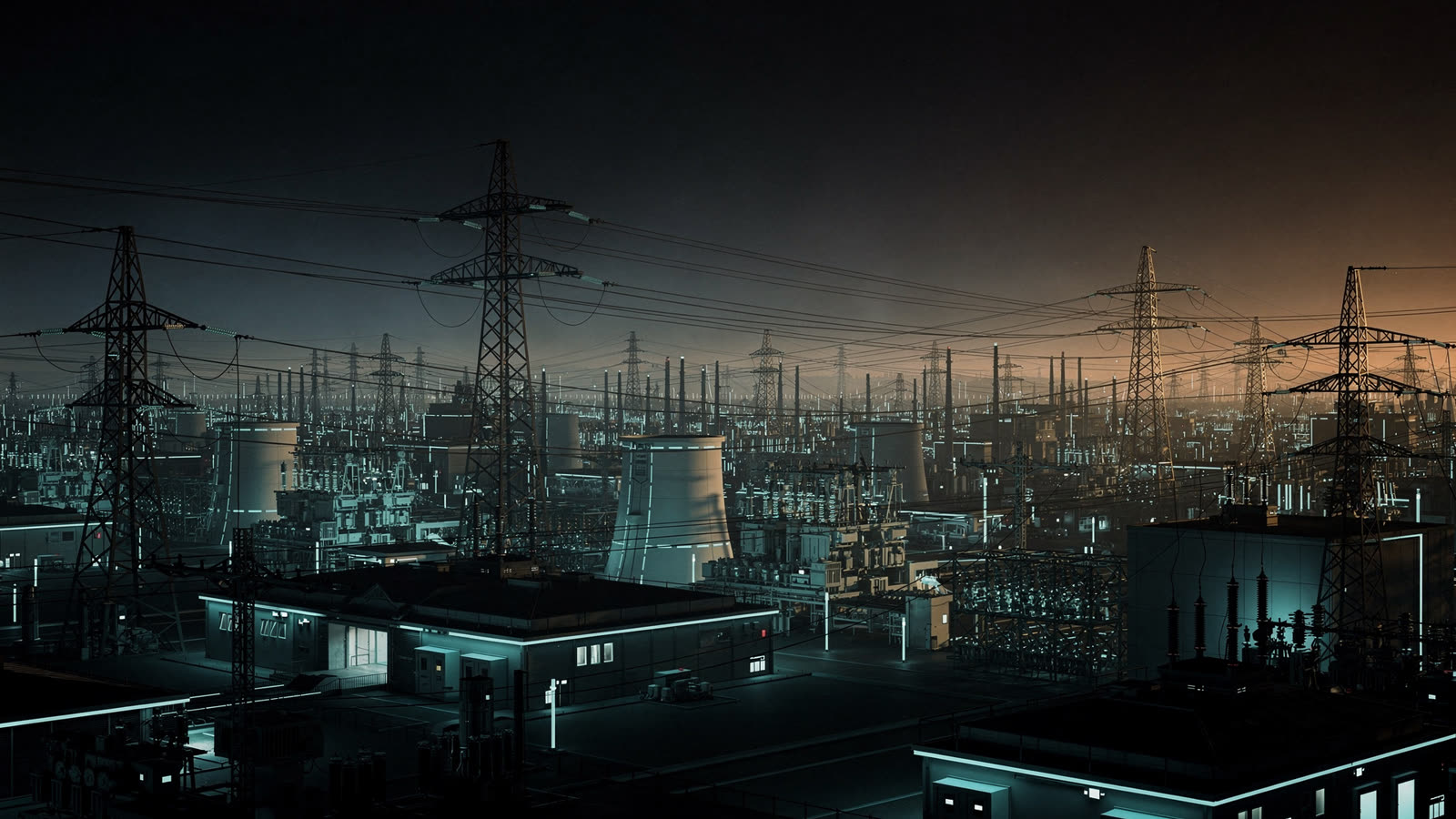
There's a particular kind of sales problem that shows up in infrastructure at scale. The buyer is real. The commitment required is real. The money involved is real.
The product isn't built yet.
The gap between what exists and what needs to be communicated can span years and billions of dollars. Decision-makers on the other side of the table are evaluating something by imagining it, because they have no choice.
That's the situation we walked into with Fermi America.
Fermi is developing a private HyperGrid campus outside Amarillo, Texas, adjacent to the U.S. Department of Energy's Pantex site. Combined-cycle natural gas, nuclear, solar, and battery storage feeding hyperscale data centers at a scale that's hard to picture until someone tells you the acreage: 6,000 acres.
Their audience is the largest AI and tech companies in the world, institutional investors, hyperscalers running infrastructure decisions at the global tier. These aren't people who sign leases based on enthusiasm.
And the site, for now, is mostly flat Texas dirt.
What "phase zero" actually looks like
Fermi has completed what they call phase zero: the horizontal construction. Perimeter fencing to government-grade security spec. Miles of water pipeline. Substations. Electrical interconnects.
The Siemens SGT-800 gas turbines are already on the ground. The GE 6B units arrive by end of the month.
The first data centers won't go up until the first tenant signs.
Brian Magallanes, who oversees marketing for Fermi, described the gap plainly: "It's hard to grasp until you actually see how big it is in person. It's 6,000 acres."
That's the problem. The scale is the selling point, and scale is the hardest thing to communicate about something that doesn't fully exist yet. Engineering drawings tell you the numbers.
They don't make a hyperscaler feel what it means to have that power density, that land, that infrastructure, that close to Amarillo.
Fermi's leadership knows the moment they're in. "We're speaking to the largest hyperscalers, the largest AI and tech companies in the world and some of the biggest investors in the world," Magallanes said. "So our brand really needs to reflect that."
A chain-link fence and a schematic don't reflect that.
Building the visual language for a site still under construction
What we're building for Fermi is a library of 3D assets and an interactive investor map. The source material is whatever exists right now: CAD and architectural files from engineers, iPhone photos from a paint crew in a Houston lot where the turbines are getting their final finish before shipping west.
We take that reference and build photorealistic models of each infrastructure piece: the data center buildings, the turbines, the cooling towers, the water storage. Each asset gets delivered two ways: on a transparent background for web and print use, or placed into an AI-generated environmental scene that shows the asset on the Amarillo site, surrounded by the West Texas terrain it will actually occupy.
The goal is to make each piece of Fermi's campus feel located, not floating in render space.
The larger project is the interactive map. It opens on a view of Earth, zooms into the Texas Panhandle, and flies down to the Fermi campus. From there, a viewer can click through different parts of the facility.
Click a building and get the 3D still. Click another layer and see the proximity to Amarillo, the airport, the power infrastructure nearby. The map is architected so new buildings and assets drop in as we create them.
The tool evolves with the project. Placeholder content swaps for real copy as Fermi's teams write it.
This is a living investor tool being built in parallel with the site itself.
Why AI-assisted rendering fits this client specifically
Most of the environmental rendering, the flyovers, the site-in-context photography, is AI-assisted. We use AI to fill in the sky, the terrain, the ambient detail that makes a render feel like a place instead of a geometry exercise.
For most manufacturers, that's a workflow choice they'd rather not explain to their buyers. For Fermi, it's on-message.
"Our industry is artificial intelligence," Magallanes said. "So for us to leverage as much AI as we can is actually kind of a pillar for our brand. So that's great."
The speed advantage compounds that. Fermi is moving fast. Turbines that were in Houston getting painted are shipping to the site within weeks.
The site plan itself is evolving. An AI-assisted workflow built from whatever reference exists right now means assets can turn quickly and update as reality changes.
When Fermi adjusts its branding, that change gets reflected across all assets. When a new building gets added to the site plan, a new request goes in the queue.
What the map does that a brochure can't
A static render solves one problem: it makes the site feel tangible. The interactive map solves a different one. It gives investors and prospective tenants spatial context they can't get from a flat image.
How close is the campus to Amarillo? Click the map and see it overlaid. Is airport proximity a selling point or a security concern?
That's a real question Fermi navigates: a no-fly zone adjacent to a DOE site creates a different read on proximity than a commercial campus would. The interactive format lets Fermi control how that story gets told, which layers appear, which comparisons get drawn, depending on who's in the room.
It also scales with the pitch. Fermi tailors its presentations for each major conversation, meaning it needs materials that can be configured quickly. A retainer relationship means they can request versions with different details without starting from scratch every time.
"This is Fermi 2.0 moving forward," Magallanes said. "We want to hit the market with world class, best in class assets."
What this project is really about
Strip away the specific megawatts and the Texas Panhandle address and Fermi's situation is one a lot of infrastructure developers are going to face over the next few years.
The data center and energy buildout is moving faster than the marketing playbook. Projects are breaking ground on the strength of commitments from investors and tenants who are making decisions before construction is complete. That means the team that can show a future that feels real, grounded in actual infrastructure and actual geography rather than stock renders and aspirational copy, is operating at a different tier than one handing over a schematic and asking people to imagine the rest.
For Fermi, the 3D assets are part of the pitch infrastructure, built to evolve as quickly as the site itself. Each new turbine modeled, each building added to the interactive map, is one more thing a hyperscaler can point to and understand.
The site is being built. The case for it has to be built first.
Referenced: Fermi America · LinkedIn
Have a complex product that's difficult to explain?
Show us