

Complex Products, Clearly Sold
When the Product Is a White Box, the Story Does the Selling
When a high-value product looks like every other box in the room, the narrative and the demonstration carry the sale. Here's what that looks like in practice.
Kelly Massad, Co-founder, Mainstay Digital · 7 min read
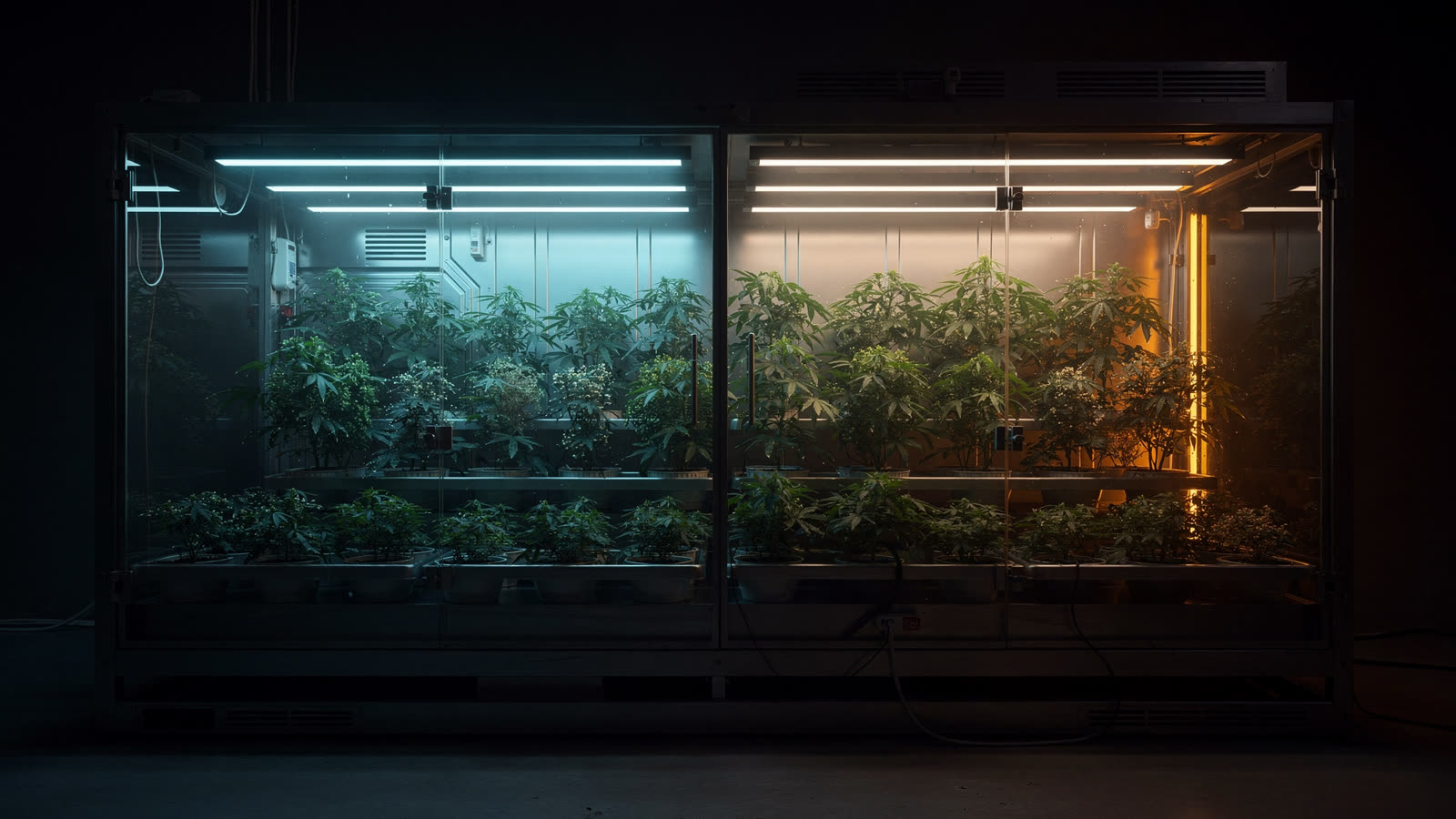
There's a category of product where the engineering is extraordinary and the object itself gives almost nothing away. You can't see the precision. You can't see the science.
You can't see the sixty years of hard-won performance data. You see a white box with a logo on it.
This isn't a niche problem. It shows up in control systems, enclosed chambers, configured environments, anything where the capability lives inside. And it creates a specific selling problem: the prospect who can't picture what a product does can't feel confident buying it.
A spec sheet tells an engineer the numbers. It doesn't help a procurement committee, an institutional budget holder, or a scientist evaluating three vendors feel the difference.
The companies that figure out how to close that gap don't do it by explaining harder. They do it by showing better.
The product that controls everything and looks like nothing
Conviron has been building plant growth chambers and walk-in growth rooms in Winnipeg since 1964. Their equipment runs in research facilities across more than 90 countries. When a plant scientist publishes findings from a controlled-environment study, 1 in 2 of those papers cite Conviron equipment.
The research community trusts them. That trust took decades to earn.
Their current product push covers 3 platforms: Argus Axia, a greenhouse climate control system; Lumina, a new walk-in growth room; and Stratos, Lumina's more configurable sibling for complex research applications.
Each one is technically sophisticated. None of them announces itself visually.
Richard Marusyk, who heads marketing for both Conviron and Argus Controls, put the Axia challenge exactly right: "It's actually quite a boring looking product that we manufacture. It's just a white box with a logo on it, and it's just hardware. But you know, that's what it is folks. But it is cool. There is an element of coolness. This system controls your entire greenhouse."
The gap between what that system actually does and what a prospect sees when they look at it is enormous. Filling that gap is what the selling work has to accomplish.
The Axia launch in particular carried real organizational weight. "It's probably the most important product launch that we've ever done, quite literally for Argus Controls," Marusyk said.
That's the context we were working in. The most important product launch the company had ever done, for a product that looks like a white box with a logo on it.
What the content had to do
Our job was to take CAD files, real greenhouse B-roll footage, and screenshots of the software dashboard and turn them into videos that made each product feel as capable as it actually is.
That meant photorealistic 3D rendering of the hardware, software screen animations woven into the cut, and enough cinematic craft (soft focus, precise lighting, well-timed camera moves) to give technically dry subject matter some energy. For Lumina, we extended an establishing greenhouse shot using AI to put the chamber in a real research context before the product close-up begins.
For Stratos, the chamber comes in multiple configurations: different lighting arrangements, different airflow systems, different ways to load plants. Rather than leaving that configurability to a spec table, we showed the variants transitioning from one to the next in the animation, letting the motion carry the story.
After the first two videos delivered, Marusyk was direct: "It's the best rendering video that we've ever done, I think, you know, the two that we've got from you so far."
That's the bar the content was expected to clear: better than anything they'd had before, for the launch that mattered most.
Where the video actually lives
One thing I've learned working with industrial companies is that trade show context shapes what the content needs to do long before the video goes on the website.
At a booth, audio is usually off. People walk by, glance at the screen, keep moving or stop depending on what they can read in three seconds. Early in the Conviron work I made the case for keeping text callouts visible in the video even when Marusyk was leaning toward a cleaner look: "Oftentimes the audio is not playing. So having the text callouts during a booth playing in the background, people can walk by and they could see what's happening in the video without hearing it."
He took that seriously. By the time the Stratos video was in planning, he'd already integrated the Lumina video with live footage for a trade show opening that week and reported it was performing.
That's the reality of how this content gets used. It loops on booth monitors. It gets cut together with live footage for hybrid reels. Sales reps share it on calls. The video has to work without context, without audio, without someone narrating it in person. When it does that well, it becomes something a sales team actually reaches for instead of a brand asset that sits in a shared drive.
What we demoed next
The bigger shift in our conversation with Conviron came when we showed them what the next phase of work could look like.
We built a hotspot prototype from the 3D models already created for the Lumina video and walked Marusyk through it. An interactive hotspot experience turns a static product model into something a prospect can navigate. Click the control panel, get a description. Click the door, learn how the airflow system works. Move through the features at your own pace, in the order that matters to your research application.
Our creative director Steve Palaia walked Marusyk through what the tool would make possible: "You are able to update the text on yourself, by yourself, update the images, the videos. If your sales guys were pitching a particular company, they could tailor the messaging directly to that client. If it was for the wheat industry, the marijuana industry, whoever, you could have the callouts relevant to that particular industry."
Marusyk's reaction was immediate: "I love this. You guys are great by the way...This is exactly what we want to do."
What he recognized was the sales utility. A hotspot experience can sit on the website as a self-serve tool for researchers evaluating vendors. A sales rep can pull it up on a call, click through the features relevant to that prospect's work, and make the pitch feel specific without building a custom deck every time.
"I think it can sit on the website alone, people can play with it or it can be brought into a demo," Marusyk said.
We also demoed what analytics on top of that tool would give them: data on which hotspots get clicked, how long visitors stay, roughly where they're coming from. Over time, that tells the marketing team which features are driving the most interest from which segments.
That information is usually a guess for industrial marketing teams. Having it changes how you write the next product brief.
To name it clearly: the hotspot experience and the analytics layer are what we demoed and planned. The three product videos for Axia, Lumina, and Stratos are what we delivered. An AR model that would let a researcher stand a walk-in growth room on their lab floor at true scale before any capital is committed is in development.
The sequence matters. You build the 3D asset, you put it to work in video, then you extend it into interactive and spatial formats because the hard work of building the model is already done.
The pattern behind this
Strip away the plant growth chambers and what Conviron is navigating is a pattern that repeats across technical equipment markets.
High-value products that are visually undifferentiated force the selling burden onto content. The product can't sell itself on appearance. The salesperson can't always be in the room.
The spec sheet reaches the engineers but doesn't move the people with budget authority who have to sign off on a capital purchase they can't intuitively picture.
A demonstration that travels is the answer. A video that works at a trade show booth with the audio off. An interactive tool that lets a prospect explore the features that matter to their specific application. An AR experience that makes a walk-in growth room feel real before the purchase order gets written.
The content does the work the product appearance doesn't.
For the industrial companies I see doing this well, the 3D model is the asset they're amortizing. They build it once, from their CAD files, and then they extend it: video first, then interactive, then spatial. Each format reaches a different buyer at a different moment in a sales cycle that often runs months and involves multiple stakeholders who'll never be in the same room at the same time.
The companies still relying on photos of white boxes are losing deals they don't even know they're losing. The prospect moved on before the capability ever got explained.
When the product can't walk into the room and show what it does, the content has to.
Referenced: Conviron · LinkedIn
Have a complex product that's difficult to explain?
Show us