

Job-to-Market Distance
The Distributor Who Decided to Out-Market His Own Suppliers
When the company closest to the customer has better marketing instincts than the manufacturer, the distributor can seize the narrative. Brabazon did.
Kelly Massad, Co-founder, Mainstay Digital · 6 min read
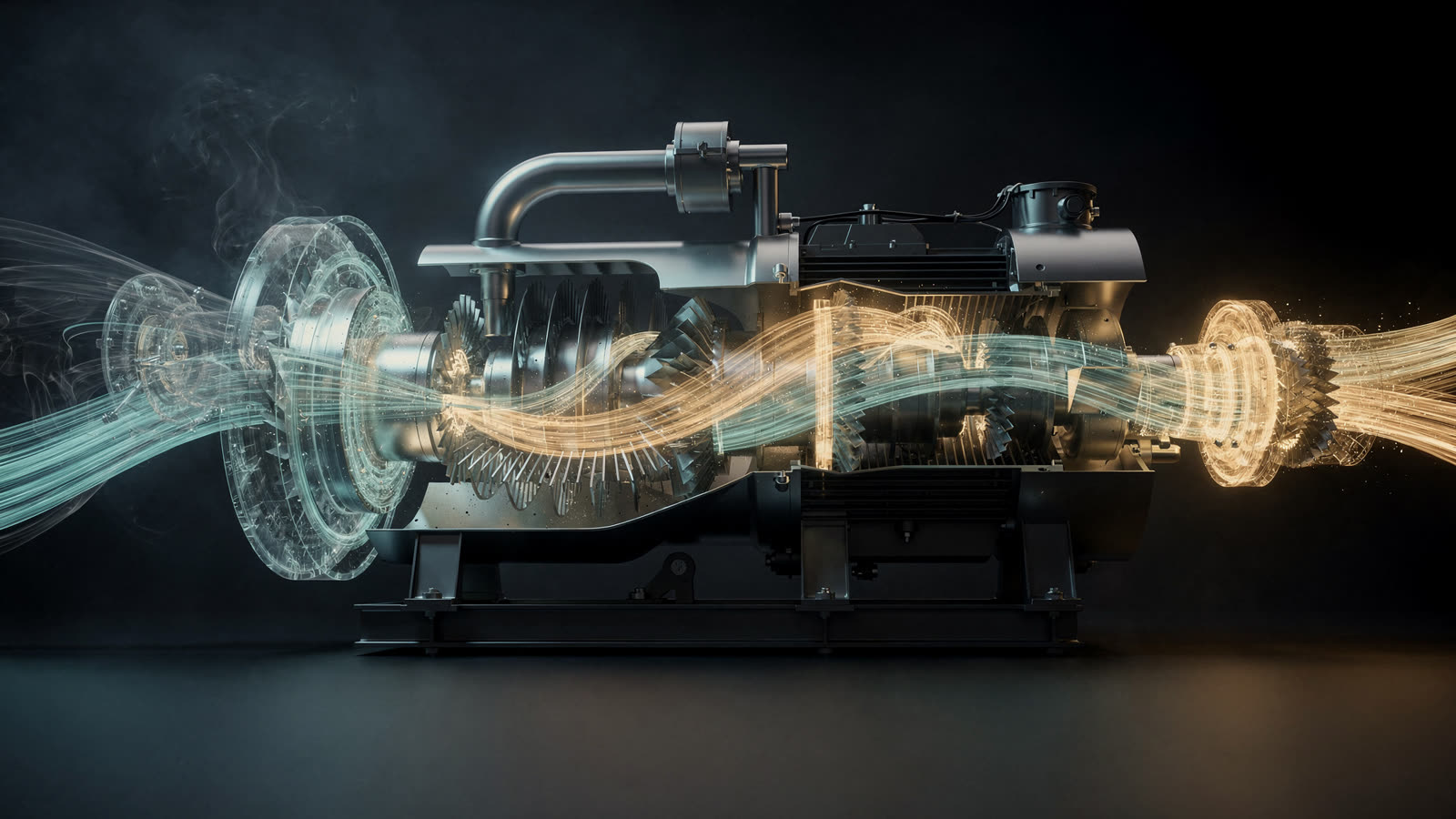
There's a power dynamic in industrial distribution that almost nobody talks about out loud. The manufacturer engineers the product. The distributor sells it.
Marketing sits in between. And what happens in that gap determines, more than most manufacturers would like to admit, whether their equipment actually moves.
The assumption has always been that marketing flows downhill: manufacturer produces content, distributor uses it. But that assumption only holds when the manufacturer is producing anything worth using. A lot of them aren't.
Explaining complex industrial equipment visually is genuinely hard, and it's not where most manufacturers have put their energy.
Job-to-market distance is the idea that the person closest to the customer isn't always the person with the clearest voice. A manufacturer might build the best rotary compressor on the market and still be terrible at showing a facilities manager why it matters.
The distributor, talking to buyers every day, understands the questions that actually get asked. That's real knowledge. The question is whether it stays inside the sales call or becomes an asset.
Brabazon decided to turn it into an asset.
The gap they were looking at
Brabazon Pump, Compressor and Vacuum has been the Midwest's largest independent distributor of pumps, air compressors, and vacuum equipment since 1978. Seven locations, 14 metro areas across four states.
They distribute a range of compressor, dryer, and vacuum brands. Real machines with real complexity.
Take a refrigerated air dryer. Compressed air enters one side, passes through a marine-grade aluminum heat exchanger, moisture drops out, dry air exits the other side. An intelligent controller monitors dew point, manages drain cycles, tracks operating modes.
The physical machine is a box. What happens inside it is what a buyer actually needs to understand before they'll commit to it for their facility.
A photo on a spec sheet doesn't do that job. A paragraph of technical copy doesn't either. And for many of the brands Brabazon distributes, that's all there is.
Christopher Heine, who handles marketing for Brabazon, framed the situation plainly when we started working together: "We're using you. We are selling and starting with these dryers here to show a proof of concept." The first video wasn't just a video. It was a test of a model.
One dryer, one video, one question
The proof of concept was the N1000 refrigerated air dryer, a product Brabazon distributes and knows well enough to explain from memory. The goal was to build a 3D animated video that shows the internal operation, makes the value visible, and can be used at the point of sale.
Doing this well requires getting specifics right. During our first working session, Steve Palaia, Mainstay's managing director, ran through the model and immediately flagged something: "To me there's no obvious distinction on which one might be in or out because they practically look identical on both sides."
Inlet and outlet ports that look nearly identical on the exterior model. Heath Brabazon pulled up a 2D engineering drawing and confirmed which side was which. Small detail. Wrong if you get it backwards.
The interior of the machine was a separate problem. The CAD file showed the exterior shell but not the heat exchanger inside. Palaia walked through the options: "We can just do our high-level overview where we approximate the arrows. Or if you've got great photos or a PowerPoint with more detail, we can approximate the modeling inside. And if you can get us the Step file that actually has the internal structure, we can do a real X-ray and make it really slick."
The manufacturer had the detailed file and was responsive, so they would request it.
Then the drain. No drain component was modeled in the existing file, just a hole. The drain matters because on premium models, a zero air loss drain is a real selling point. It belongs in the video.
Same with the digital controller display: what shows up on screen across different operating modes is a visual story that belongs in a video about a product whose whole value proposition is intelligent monitoring.
None of this is unusual. It's the ordinary friction of building something accurate from a file that was designed for engineering, not for explaining the product to a buyer.
The difference is that Brabazon knew exactly what mattered and why. They had the answers because they live inside these sales conversations.
What they're actually building
The N1000 video is one product. Brabazon distributes many.
Heine was explicit about what comes next: "We've got just tons of product videos that we need coming down the pipe." The plan is to take the finished dryer video into the manufacturer relationships Brabazon holds and use it as a demonstration: here's what we built for this product, here's what we want to do for your line.
The distributor becomes the one setting the creative direction.
There's a real constraint inside that plan. Some of the suppliers Brabazon distributes are direct competitors with each other, and a multi-brand distributor can't favor one manufacturer's content strategy over another's. But that's a tractable problem: videos can serve both parties, and the framing can be calibrated.
Heine described the goal for future content as adding a Brabazon bookend, "just, you know, Brabazon, get in touch with us today or here's why we're great at service or something like that. Make them Evergreen, but awesome."
That word is worth sitting with. Evergreen. The goal is a piece of content that outlasts the quarter, explains the product, and closes the loop back to the distributor who stocks it, services it, and knows it cold.
Manufacturer gets a product video. Brabazon gets a content asset that lives on their site, goes to prospects, and differentiates them from every other distributor selling the same line.
That's a different model than waiting for marketing to come downhill.
What it means for anyone in the channel
Industrial distributors have always been translators. Between what manufacturers build and what buyers need. That translation has lived in the sales call, the site visit, the rep who knows the line.
What Brabazon is doing is making that translation shareable.
When a distributor owns a precise 3D video of a product, they stop depending on the manufacturer to update a spec sheet or commission new content. The asset belongs to them. It can go in front of customers, into onboarding for new service techs, onto the trade show screen.
And if the manufacturer wants it too, that becomes a negotiation about the relationship, not a dependency on the manufacturer's content calendar.
The distributors who build this library now are compounding an advantage. Every video is another product explained clearly. Another buyer who comes into the conversation already understanding how the machine works. Another reason a prospect calls Brabazon before anyone else.
There's also a subtler thing happening here, which is about who holds the narrative. Manufacturers with strong content programs own how their product gets described in the market. When the manufacturer's content is weak, that description defaults to whoever is talking to the buyer most frequently.
Distributors talk to buyers constantly. If they have the visual assets to back up those conversations, they aren't just executing the manufacturer's story. They're writing it.
The first Brabazon video was still in production at the time of this writing. The shape of what they're building is already visible: a model that starts with one dryer, proves the format to one supplier, and scales across a product catalog that the manufacturers haven't figured out how to show.
That's a real position to occupy. Most distributors are still waiting for the content to come to them.
Referenced: Brabazon · LinkedIn
Have a complex product that's difficult to explain?
Show us